Wednesday, September 30, 2020

What is a Ranger,

 but a mismatched pile of special abilities.

The Ranger is a class that no one seems to be able to figure out.  The only other class that comes close to the constant stream of dissapointment is possibly the Monk.  It has had countless revisions both between and within editions.

I imagine that the problem lies with the original concept in general.

-I have no proof of this (maybe some digging over at Playing at the World would turn up some into), but presumably someone wanted to play Aragorn, so we have a class that emulates that character's abilities in Lord of the Rings.  But some of the abilities described in that work are the result of Aragorn's heritage and status, not his day job of running about the woods.  So in addition to the woodsie survival stuff, you also have an odd mix of divine and arcane spells and tricks (depending on edition)

-This brings us to the basic definition of a Ranger: one of a body of organized armed men who range over a region especially to enforce the law; a soldier specially trained in close-range fighting and in raiding tactics.  Honestly, that just sounds like any given D&D character? They leave the confines of civilization, raid dungeons, fight monsters in close quarters, and bring"law" to the wilds

The combination of odd abilities and a lack of clear thesis started the class of on a bad foot.  Then over time, it jut gets more confused. Drizzt shows up as a Ranger who can fight with 2 weapons (because he is a Drow), but that gets folded into the class.  Around 2e they seem to start the transition from folks who tame nature, to ones who protect it.  It is also my personal belief that since D&D lacked a proper swashbuckler type character, many folks looked to the Ranger class to create that sort of archetype, further muddying the expectations of the class.

3e comes along, and suddenly the doors open for character builds, but 2 weapon fighting is still presented as a core concept for the class?  It also gets pushed more into the "Nature Magic" camp than before, and you get animal companions (taking a bit from Beastermaster, which always seemed more of a Barbarian achretype). 3.5 adds the option of Archery, and also some acutal wilderness special abilities, but then dials back the HD, making it seem less of a warrior.  And you still have the long standing issue of a class who's major ability (favored enemy) only comes into play when the DMs plans for it.

4e, for whatever your opinion of it, did try to mitigate some of the issues by giving the class things like Hunter's Quarry and other abilities that synergized with "Special Forces" archetype to give it a niche.

So now we have a class that folks want to be about animal pals, and nature magic, and wilderness survival, and favored enemies, and Two Weapon Fighting, and Archer, and and and....

It cant be all of those things, even if you try to split all the flavors out into different "paths"

We circle back to the question, does it even need to be a class? Can it even be a single class, or should we give some of its stuff to the Fighter, Barbarian, and Druid and leave the title "Ranger" the same way we might use "Thief", "Witch", or "Knight"?


Wednesday, September 23, 2020

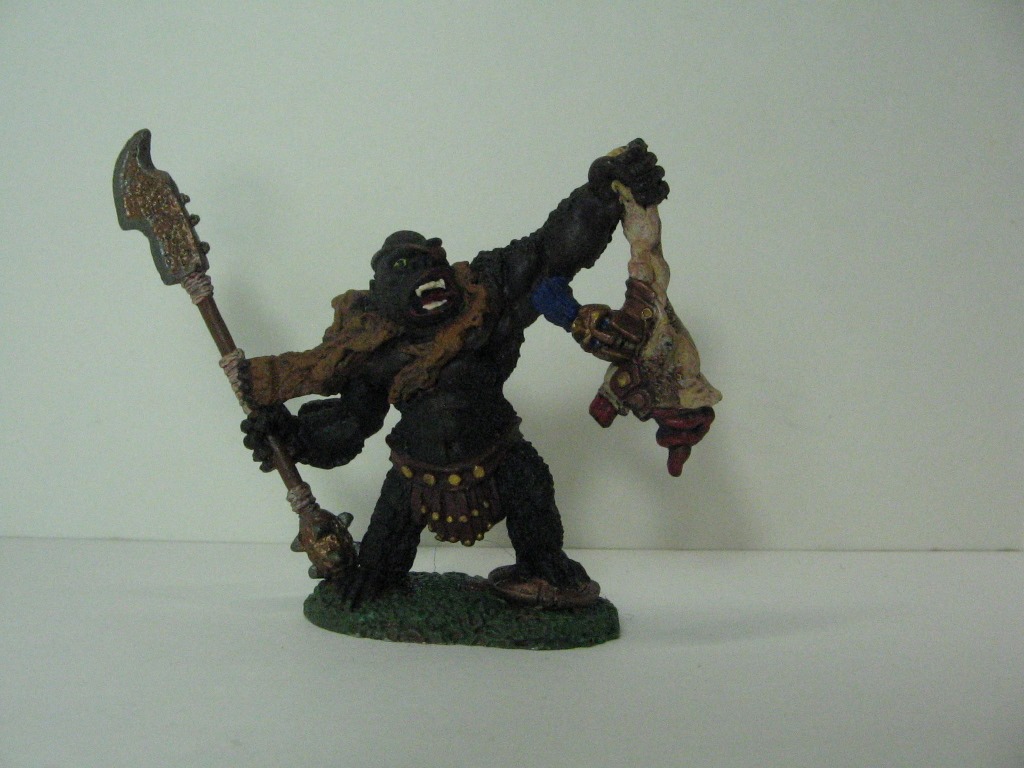
Mini Painting

 My first mini painting set was a free starter set that came with some Ral Partha minis I had orders (by mail catalog).  Prior to that I would never have considered even trying to paint minis. I didn't want to ruin my prized DragonLance and Draconian sets, so I hit the bargain bin at my local hobby shop and grabbed some Shadowrun minis to practice on first.  This also got me started on modding minis (something I prefer not to do often), trying to turn sub machine guns into something resembling a crossbow.  I still have those minis, they look alright.

At this point I was all in on the detailed painting of minis.  I got decent spread of citadel colors from the hobby shop and set about the task for the next few years.  (I still have some, those 90's citadel bottles were way better at preserving paint)  Again, those minis are crudely done, but still presentable next to more recently painted items.

Then the great hiatus.  My several year break in gaming also resulted in several years away from painting.  I briefly got back into it on and off, but found my paint drying out and getting frustrated (citadel had switched to screw on tops).

I finally started up again about 8 years ago, but this time I was determiner not to drop a fortune in mini paints.  TO THE CRAFT STORE!  Ever since then I have done the majority of painting with standard $1 craft paints (and those 25 year old citadel colors).  They have worked wonderfully.  I had to go back and pick up some silver and gunmetal metallics, as I have not found craft ones that hold up.  Oddly brass, gold, and other "yellow" metals are fine in craft paint.  Also I need to pick up some specialized "flesh" tones (another area craft paints seem to be lacking).

But, even if you are a serious painter, I would encourage you to pick up some primary colors, grey, browns, greens, and black to help fill in the gaps and give you more variety of colors on the cheap.

Now I just need to get better at photographing:


Monday, September 14, 2020

Miniatures

Reapercon has come and gone and it got me thinking about miniatures (plus the non-stop painting for the past year and a half since my Bones Kickstarter arrived)

I enjoy mini's for their own sake.  Before D&D I was into model trains and towns (not that I could afford any besides what went under the tree).  Legos too.  So even if not for RPGs I would likely have spent a good chunk of my free time painting tiny people and buildings.

My first D&D games used a mix of the DMs HeroQuest, Ral Partha, and Grenadier minis.  When I brought my Dark World minis, the collection nearly doubled.  Minis seemed a natural thing, after all, it is a game and games have pieces.  It was a year or two later playing with a different group that I was introduced to "theater of the mind".

So in short, I like minis.  I like painting them as a hobby, and I use them frequently in RPGs (current state of the world and no in-person D&D not withstanding).

I do wish that early D&D had settled on a 1' = 1yard (or meter) scale.  It would have given us army men sized minis which I think would have opened up a bigger world to mini sculpts earlier on.  It also would have made map scales make more sense where the markers for doors/windows are concerned, but that is a different discussion.

So that said, I don't mind the overall trend to larger minis.  Though, it is weird having some Halfling/Dwarf minis that are burlier than my classic barbarians.  I appreciate having more room to work with paint.  Somewhat in-congruently, I am less of a fan of they overly detailed minis that are coming out in recent years.  They gave me bigger minis that are easier to paint, but then crammed them full of tiny details!!!  Also, I feel the details and bits, makes it less and less likely that the minis is a "fit" for your character.  But I guess if you want that level of compatibility, you go to Heroforge. 

Bones are great, and I have great luck repainting old D&D Miniatures in addition to those ancient board game dudes.  But I still think metal is better.  Maybe because it is what I learned with, I find painting to be easier.  I enjoy the literal flexibility.  So whenever I can, I try to pick up things from my wishlist on the Reaper metal catalogue,  especially if it is something unlikely to be made into Bones.  (I may prefer metal, but my wallet prefers plastic)

That said, I wish Reaper has a Sort by Sculptor function.

And lest I give all the love to one company, I highly recommend https://www.darkswordminiatures.com/  they have some great quality sculpts that have a very different aesthetic than traditional D&D style minis.

Sunday, September 6, 2020

More Mutants More Masterminds

How I went about putting together a game for Mutants & Masterminds (which I have still yet to run)

We previously etablished that after years of playing around with the system, I had settled on a 2.5 Edition as a mix of 2e  d20 core and 3e versatility in powers and effects.  Part of the reason I settle on this was that I assumed most players would be coming from a D&D background.

Many of the following points will be familiar to my discussion of Star Wars.  Since it is an unfamiliar system, and not one designed around advancement, I opt for a "quick shot" of sessions. I assume players will want to play brand name heroes (or something very close). 

While DC is personally my jam, the Avengers/MCU and Netflix shows were the owners of the zeitgeist. The Avengers, being top tier heroes and the movies being interlocked feels too restrictive for how I want to run a licensed game.  So I settle for the nice street level Netflix "Defenders".  The bonus at the time was the shows were in purgatory with impending cancellation, freeing my up continuity-wise.

So first things was stating out the characters using my two-tier characters sheet (one tab to build/one tab to reference during play).  I wanted to make sure the characters were balanced against one another.  Jessica Jones and "Iron Fist" can damage Luke Cage.  Iron Fist is better 1v1 and Daredevil can sweep a room.  I also throw in Punisher, which was an interesting challenge, since his powers are Guns and Rage.  Its not too long before I have them dialed in at PL 8 and a good idea of what they can take on.  I also throw in Blade, because I want too.

So, what will be the threat?  I went back and forth on ideas, what is something that will be more interesting than a bunch of ninja's or special forces, but not TOO big for this group.  Thankfully the movies ended up delivering.  "The SNAP" gives the perfect opportunity, major heroes are gone, the worlds is in disarray, and our heroes need to step up.  And because of studio politics, there will never be any worries of continuity (so I should not have to worry about rewriting this if we don't play for awhile - which is proving to be the case)

 Generating content is easy, maps of NYC, quick stats for police, ninja, special forces, generic goons.  But I need a villain for them to face off in a climactic battle and the mastermind behind it all.  I think Tombstone is unaccounted for and would make a good fit.  Also he is obscure enough I can tweak his power level to be threatening to the whole party. Taking cues from other media, it looks like he is distributing drugs laced with terrigen to create inhumans in order to force a conflict between the populace and enforcement agencies.  Part of the details are purposely vague at this point to leave me room to adapt and "yes and..." the player's ideas.

The inhuman angle also allows me to throw more "supers" at the party, so I make some low level knock off X-men as baddies as well.  This will allow me to get some practice with battles before the game progresses too far.

One day we will see how it went....


Sunday, August 30, 2020

More Mutants & Masterminds

 Last time I went on a ramble about my history with the Mutants & Masterminds system and how I still have never really played it.

So, I can't speak to how good of a game it is, but it is a fun toybox.

I spent many an hour just creating characters and playing with the features of the system.  I would read up on house rule and debates over the efficacy of certain parts of the system.  I was eager to pick the whole thing apart.

M&M was the system that started my habit of creating a custom character sheet in excel as a way to understand the system.  

Lets face it, the complexity of the M&M character creation rules almost necessitates the used of a spreadsheet program.  

One thing I learned in doing all this work, is that no one I knew would go to this much trouble to play a game.  It also seemed to be that the default character sheet presented too much info to let a casual player function at the table.  This was also the birth of my trend to make a second simplified "at table" character sheet to go along with the one used for character builds.

The end result was a sheet that just listed the "Things you can do" and what you needed to roll to make them happen.  Most player's will not be able to make heads nor tales of how a power is constructed.

These days I have the system beaten into shape as a 2.5 edition.   I use the familiar d20 based ability scores, and combat values, but have reduced the skills down the the typical dozen you seen in current RPGs.  I also used the simplified power construction of 3e.  I think it looks pretty good:


The upshot of the system is that most of the house ruling is on the character creation side, so it does not bog down players and GMs once the action gets started.

Which is good since, designing and running a non-dungeon based game is tricky (see my discussion on Star Wars RPGs), further complicated when heroes can fly across the country in the blink of an eye.

Next time should be less rambling, and more about the actual process of creating a M&M games scenario.


Monday, August 24, 2020

Mutants and Masterminds

Mutants and Masterminds: I have made tons of characters, and played around with the rules, and planned a campaign.  But never ran or played a game.

Many years ago some friends and I were attempting to get an RPG group together in our grown up lives, and M&M was the system the GM wanted to run.  I had heard of the game, but not much else.  I was still firmly in the fantasy RPG realm.

We got together around the table and brainstormed characters for the GM's version of Suicide Squad.  Honestly, it took me awhile to "get" the game.  The system made sense for the most part, being based on d20 D&D that I was familiar with, but I think it was the "build whatever you want" aspect that threw me.  Especially when you are playing along side others who can also build whatever they want.

 I recall I ended up making a time displaced Hyperborean Barbarian (still in fantasy RPG territory), another had made the Ghost of a cursed Egyptologist (think Evie from The Mummy, but a ghost), I think we had some sort of flying brick, and a few others.  I don't know how well our group would have worked. As I eluded to above, things fell apart before we could play.  

Now I had myself a set of books, but no use for them.  I eventually came across The Atomic Think Tank (now defunct) and could see all the builds and ways people used the system.  This helped me to really get the game.  It is also when it clicked for me personally, that Comic RPGs might work best if you just accept that you are going to play iconic characters (or reasonable facsimiles).

I spent the next few months just making my ideal version of the Justice League, Avengers, and other beloved characters. Mixing and matching, creating build templates for Atlanteans, the Super Soldier Serum, and eventually Autobots and Decepticons.

A lot of what I leaned about the system (and later M&M 3rd edition) would help inform many house rules for D&D as well.  But house rules and tweaks are another discussion...

Sunday, August 16, 2020

Modules and the Prepping Thereof

First of all, I get it.  There are probably lots of philosophies and market research concerning what a module/product should look like based on what is perceived to increase sales.  But for me, rarely do I see a module that I feel like I can open and run at the table with less prep than it would take to just make my own.  For a time Dungeon Magazine (Paizo era) did a good job.  They were able to publish something that was easy to read, and also got the pertinent info in front of you.  Perhaps this was a byproduct of the length of the scenarios?

Generally I am not looking for adventure paths/whole campaigns.  I prefer a sandbox game, and find players will move on (IRL or In Character) before such a module could be finished.  Honestly, I usually am not even looking for plotted out adventures, just an interesting hook, or location/map, or scenario that I can drop into whatever is already going on in my game.  In my experience most modules are presented as literature to read through, and less as a game aid.  I find I need to take the info presented and jot it down on my own to make it something I can use at the table.

My Process

Read/Scan through the module.  First, I have to know what is in it, but this is also a good way to get a feel for if it is going to be worth the effort.  If a reasonable reading/scan of the work doesn't give me a pretty good idea of the plot/event major turning points of the adventure, then it is probably going to take to much to make it table ready.  This step can be harder in PDF depending on how much flipping back and forth the layout requires, nothing beats sticking your finger between pages....

Next I make an outline of the plot points with a note for any special crux moments ex: "You must remember to mention the Regent's purple cloak, it comes up later"  I do the same for any other important factors, Character Interactions, Timelines, Major Spells/Magic items.  I do the same for the map, usually skipping over the individual text for any given room and instead making spots for notes.  

The biggest effort (and it is entirely my own preference) is re-writing stat blocks.  It can be a lot of work, but it matches how I think about creatures.   It is usually something along the lines of - Things that can come into play before interaction (senses, auras, languages, certain spells and skills) - Early Combat (initiative, movement, AC, saves, special defenses) - Late Combat (attack, damage, special attacks).  Depending on how the creature(s) are used, they may be done "in-line" with my notes, or as part of a separate creature sheet.

By the time this is all done, I have 1 - 3 one sided sheets, depending on the amount of content.   In its final form, it consists of a Map with basic info, and call outs for specific items.  A plot/notes area to make sure nothing important is overlooked. A creature section. Some or all of these go up on the inside of the DM screen.  This usually leaves by DM area free for the notebook I use to run combat and keep notes for future use.

Again, I get why you would not publish a product in this way.  I would end up looking more like an instruction manual than a pretty piece of heroic fantasy.  But it would be nice if we could get back to a sweet spot where the info needed at the table could be put right in front of the DM.  It would probably also help the publishers to located and fix plot-holes/ issues within the product.  But The Alexandrian can tall you all about that....

Tuesday, August 11, 2020

Changing Gears

This weeks game ended abruptly.

One of the player's suddenly decided that their character had misgivings about plunging deeper into the dungeon.  Mostly feeling bad about invading the homes of Ogres that had not really done anything bad.

Now, the conceit of this game when we started was a basic dungeon delve.  The combination of playing over Skype and real life constraints made a pre-populated dungeon appealing to me to run.  I tend to run sandboxy games, so this game was a change, and so I had no sandbox or other content prepped. 

Normally when a situation like this comes up, I will pause the game and have a moment of real talk with the players.  Talk about what it is they are looking for as players, mention that we may need to break early so I can prep, etc.  However, in this case, the player who started this change of track had to abruptly jump off the call.  It was only about 15 minutes from our usual stopping point, so I had a quick chat with the rest of the group before signing off.

This left me in a situation where the player's had a stated goal to go off and see if anyone needed some wrongs righted, and me with no content beyond the immediate vicinity of the village and dungeon.  First I looked over my random notes from previous sessions to see if they sparked any ideas, no luck.  Next I opted to check out the Adventure Lookup to see if I could find something that could serve as a springboard.  After playing with the criteria, locations, enemies, intended level, I found a few that fit the bill.  One of them I actually owned!

I spent a few hours over the next 2 days quickly jotting down the main strokes of the module and how to make it fit with what little setting I had already established.  Some basic stats and we are ready to go, at least for the next session.  I didn't want to put too much effort into this until I know they are going to take the hook.  I have also worked in some clues and events that could serve to lead them back to the original dungeon with a reason to keep delving deeper.  

And if they don't? That is fine, I have at least bought myself some extra time to get an idea of what they are looking to do next, and to create some content around that.


Sunday, August 2, 2020

What I want in a Fantasy RPG

For what is ostensibly a D&D blog, I have played very little brand name Dungeons and Dragons in the last 15 years.  Granted there was very little sustained gaming for 10 of those years, but most play has been in a home brew - retro style game.  My recent 2e campaign only came about because the group had "topped out" at level 10 and wanted "more".

Why?  In short, Ease. 
Even a few years into 3e, we started to fall out of love with the fiddly bits of the game.  Mostly due to being adults with jobs and responsibilities.  When time allowed for play we went back to Basic and using later edition rules as garnish to those rules.  In time, and as a way to stay engaged with the hobby when games became less frequent, I codified it into a 64 page homebrew game.  This was about 2003?, its been revised a number of times to get closer to my platonic ideal game.

Features
Quick Start: I want the rules presented in a way that new players (without guidance from a veteran) can set up a and play in less that 20-30 minutes.  The game should not take any longer to start than a complex board games

Focused Choices: For the sake a quick start and player sanity, the choices presented need to be focused, meaningful, and easy to understand. Only present choices to the player that will matter in the long run (Race, Class, Weapons/Spells). 
Generating Ability Scores is a pain, and the difference between a 14 and a 16 strength doesn't really change the way the character "feels", its enough to know they are stronger than average and rely on that strength.
The differences between options should be self explanatory, Warrior, Sorcerer, Rogue.

Optional Options/Expand-ability:  For the above to work, you need limited options, but I want there to be the chance for repeat/advanced players and GMs to easily mix in more options without breaking the system.

That said, I still have a few quirks, a Silver coin based economy and some particular thoughts on how magic should work.  But that is all under the hood stuff, when presented in the rules, it simply IS.

I'm currently in the middle of an (eventual) revision of my homebrew, and will likely post the basics here.

Sunday, July 26, 2020

Star Wars: Actual Play

With all of our work in place, how did the Star Wars session play out?

They players came ready for Star Wars.  As mentioned, I put the pre-gens face down in the center of the table. There was one trade, and no Force Users.  After a few questions about abilities and character notes, everyone has happy and ready to go.  I read the Opening Crawl and one player opts to play the theme on their phone (I award a Force Point).

Play starts a bit slow as folks get a hand of their characters and the open ended nature of the scenario.  In no time at all they are trying to bluff their way onto the hyperrail and eventually steal a sky car.  The sky car theft leads to be chased and shot down by security forces.  A battle on the jungle floor leads to them bluffing their way past space port security in a stolen securicar.  

Their attempts to fence the stolen securicar in order to pay for transport off world go awry.  Plan B is to steal a ship outright.  At this point one of the players can't make it so is off "doing recon".  Much splitting of the party and mixed success leads to a rooftop pickup and blasting out of atmosphere.  A couple of very good pilot and astrogation checks avoids a drawn out startship battle, and they successfully complete the scenario.  The session ends with them discovering the missing PC hiding in cargo hold.

It was interesting to see how play ran differently than a traditional D&D dungeon crawl.  There was much more dependence (by the payers) on skill checks and planning than fighting.  Is it something about the setting, that steered them away from the usual "fight first" approach prevalent in a dungeon based game?

It was a fun challenge for me, lots of "Yes, And" as a GM, dealing with party splits as they attempt to accomplished split tasks. Again, a big difference in behavior than D&D.  Since the scenario was open ended, and I had no specific written plot, I did a lot of listening to the player's plan and improved base on what sounded plausible. 

When it was all over, one of the players said "This was like the opening 10 minutes of a movie.." So I figure it is time to write scenarios for the rest of that movie. 

All in all, a success.

Sunday, July 19, 2020

Star Wars Quick Shot: The Scenario

We have our rules, a stripped down d20 Star Wars.  We have our setting, the fringes of Hutt Space during the Imperial Era. We have our characters:
  • Wookiee - Soldier 5
  • Twi'lik - Scoundrel 5
  • Human Pilot - Scout 5
  • Battle Droid running Protocol Droid OS - Soldier 1 /Expert 4
Now I need an adventure and starting point for this quick campaign.  In the films, it can take a 3rd of the runtime to actually get folks together.  I don't want to do that....

So I determine the characters will already be working together, and with the setting being Hutt Space, it makes sense to just be some cadre of smugglers.  Plus, if a character dies, or someone else joins the game, there is a built in reason for a new character to show up.

I wanted to avoid just making a "dungeon in space" as it feels too limited.   I also don't want them to have complete run of a fictional galaxy, first to avoid paralyzation by choice, second to avoid having to make up worlds on the fly.  I need a sweet spot in between.  Finally, I want them to get right into play, so I brainstorm for a bit and come up with and idea, and for the heck of it, I write an opening crawl:

Pirates of hutt spacE

XIII PEARSHAPED ON NAR PARTHAN

It has been 10 years since the great Jedi betrayal and forces of the new imperial order work tirelessly to stamp out separatist troublemakers. The Hutt consortium, having no official ties with rebel interests are spared from Imperial complcations. An established mercenary group finds its latest mission on the Hutt world of Nar Parthan has ended badly. Some of the survivors have found a temporary safe spot in the outpost known as Coralite Shaft 16. Unsure of the location of the rest of their companions, they know they need to get spaceward...


Great! now how to write it up so I can run it at the table.  In the end, the whole game which took 4 sessions originally took only 3 pages, and then an additional page written up between sessions.

Rather than try to plot and plan it out, I just made sure I had a list of handy stats, info and general sketches of what I wanted the locations to look like and their relation to one-another.

  • Its a jungle world, if they go by foot, plenty of chances to use skills and fight local creatures. 
  • There is a monorail for transporting people and coralite to the space port, train heist!
  • There is a small landing pad where planetary aircraft/security forces can fly from.
So my pages to start consist of stats for thugs, law officials, locals, small beasts and a big beast, and a few vehicle types.
I also make a list of "Star Wars" sounding names in case I need them.
I also jot down some rough notes on what space ships are available.
Finally I have a timeline of events to help keep the action moving (in 4 hours, their pictures go up on the holonet, in 2 days an Imperial cargo shuttle will arrive to pick up Coralite, etc.)

And thats enough to get started on the first night's session...


Sunday, July 12, 2020

Star Wars Quick Shot: The Setting

Last time I laid out the approach I took to the rules I wanted to use for a Star Wars quick shot of sessions.  This time, we look into setting up the world and scenario in which to play.

(As an aside, I find that these sorts of licensed games are best suited to a "mini series" rather than the open ended long running game-play of fantasy RPGs.)

The first decision is, which era of the Star Wars galaxy to play in.  There is material aplenty to run a game from the Ancient Republic through the decades following the events of the Original Trilogy (Not to mention 2 sets of continuity from which to pick and choose). 

For me it was a no brainer to go with a time frame where the Empire is active.  If folks are playing Star Wars, they want it to look like Star Wars, and that means Storm Troopers and Star Destroyers.  I settled on a time right between the Prequels and the OT, this makes it easy to have Imperials, hidden Force Users, etc. without worrying about bumping into continuity or playing second fiddle to movie characters.

Following that train of thought, I next had to think about what the characters would do in this setting.  Again, I want it to feel like Star Wars, but not be hemmed in by continuity.    A quick trip to  Wookieepedia (best named fan community ever) and after looking around at whats happening 10 years before A New Hope and Hutt Space looks like a good candidate.  There is probably all kinds of interesting things going on the borders between Imperial and Hutt control.

Next it is time for some Pre-Gens. Why Pre-Gens? Speed and Simplicity, this is going to be a short set of sessions, my players tend to be less interested in mechanics and more about getting into "make-believe".  Plus, as we discussed, I made some house rules, so it is easier to present an archetypal character and not have to guide 4-5 people thought making one.

What sort of characters make a Star Wars story?  A scoundrel, a translator/diplomat, a force user, a droid, a pilot, and someone will want to be  a Wookiee. With 4 players to start, I set to make 6 characters, so there are options.  I dont want off-brand copies of existing characters, but nothing too oddball.  Finally, I settle on 5th level for these characters, powerful enough to feel like they are accomplished in there "jobs" but not too powerful that system (and house rules) break down.  Since this is a "mini series" character advancement is not a goal/concern.

When done, I ended up with:
  • Human - Force Adept 5
  • Wookiee - Soldier 5
  • Twi'lik - Scoundrel 5
  • Human Pilot - Scout 5
  • Battle Droid running Protocol Droid OS - Soldier 1 /Expert 4
  • Human - Noble 5
A nice mix of weird and fun.  I ended up putting the characters sheets face down in the middle of the table and let the player's pick at random.  A pair traded, and everyone was happy (the Force User and Noble got left in the pile)

Saturday, July 4, 2020

1776

Every year I make a point to watch 1776 on July 4th.  (I also try to squeeze in the John Adams miniseries, and this year we are going to add Hamilton to the mix)

Its a good reminder of the ideals of the nation, and how frequently we fall short, and why it is important to keep striving.

Especially this year.....